An AI receptionist answers your company’s phone like a well-trained front desk. It greets callers in your company’s name, answers their questions, books appointments and passes on what needs a person. It works around the clock.
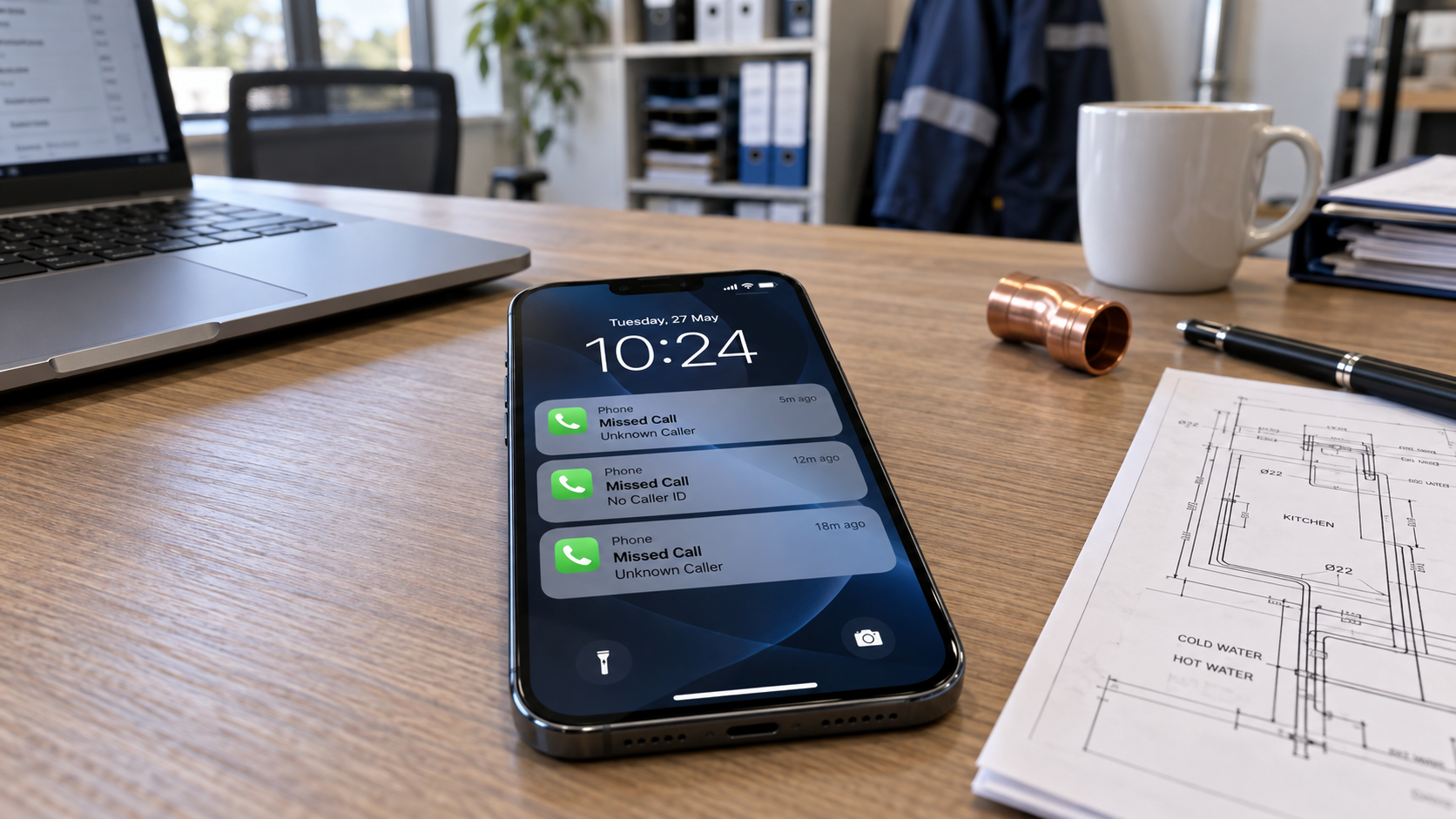
For many small and mid-sized companies, the phone is still the front door. Every call that rings out is a customer who may try someone else instead. Below: what happens on a call, what an AI receptionist can and can’t do, and how to tell whether your company is ready for one.
What happens on a call
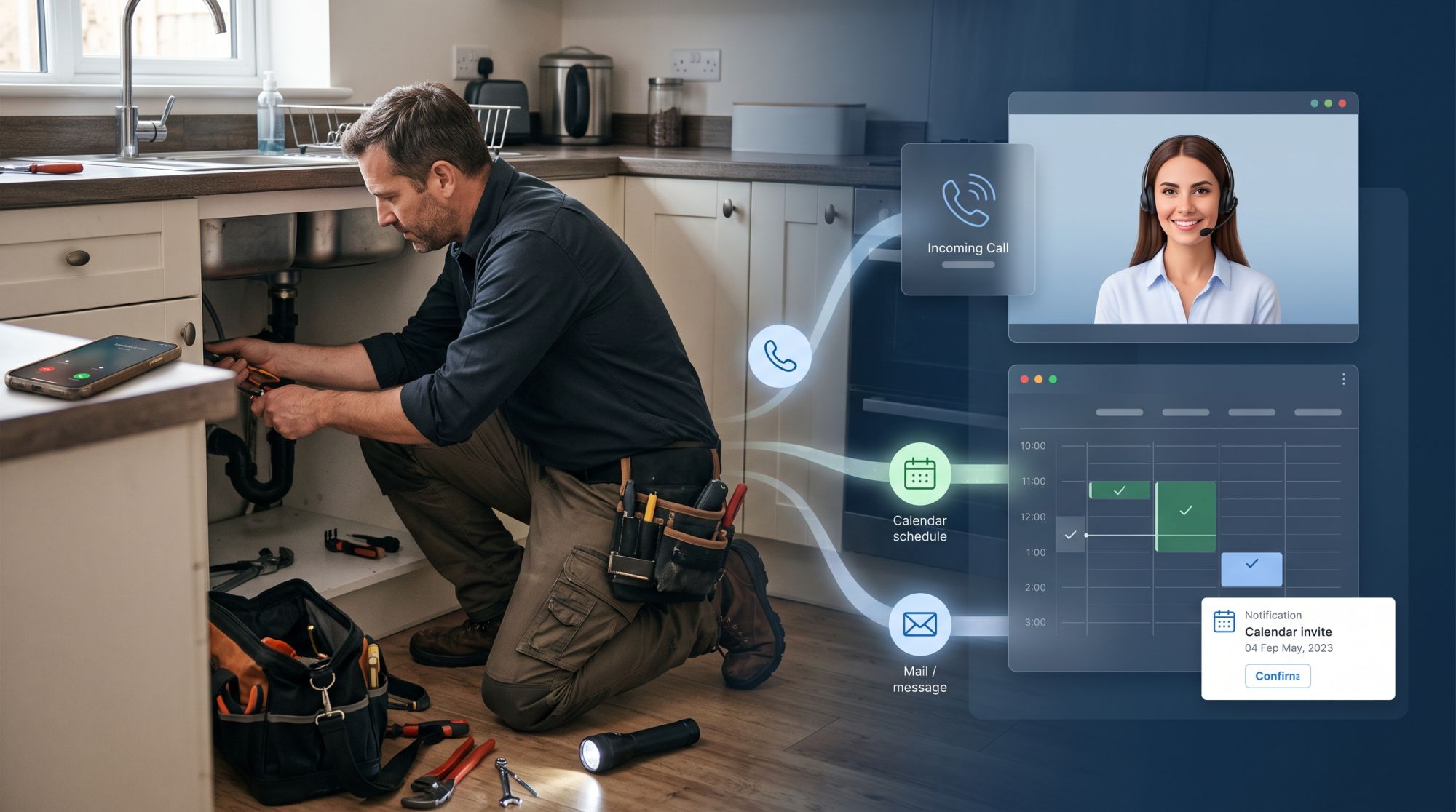
A call with an AI receptionist runs like a call with a good receptionist: answer, understand, help and wrap up.
It answers straight away, with your company’s name: at night, at weekends and when your team is busy.
It finds out why they call. The caller explains in their own words. There are no menus and no keywords to guess.
It answers from your information. Opening hours, services, prices, directions and policies: the information you have given it.
It acts. It books an appointment in your calendar, takes a detailed message, or transfers the call to the right person.
It wraps up. It confirms what happens next, and you get a written summary of the call.
What it can and can’t do
An AI receptionist handles the routine calls from start to finish, and passes on everything else with the details already collected.
It can:
answer frequently asked questions, in your customers’ language
book appointments in your calendar
take messages with the details your team needs to act, including requests to move or cancel
send each call to the right person or team
cover evenings, weekends, lunch breaks and busy hours
It shouldn’t:
handle complaints that need a person’s judgement and empathy
give medical, legal or financial advice
guess: when it doesn’t know, it says so and takes a message
deal with emergencies itself: it sends the caller straight to the right number or person
AI receptionist, answering service or voicemail?
Voicemail records the call, an answering service relays it, and an AI receptionist resolves the routine calls itself.
Voicemail costs nothing, but many callers hang up rather than leave a message, and some call a competitor instead. You call back later, if you reach them.
A traditional answering service has real people taking your calls, usually paid per call or per minute. They know little about your business, so most calls end as a message for you to return.
An AI receptionist answers straight away, knows your business, books straight into your calendar and passes the rest on with a summary. You pay one fixed monthly fee that covers the calls you expect. It is less suited to the unusual call that needs real judgement, which is why it hands those to a person.
Many companies combine AI and people: the AI receptionist takes the routine calls, and the team takes the exceptions.
Signs your company is ready
If calls slip through, or the phone keeps pulling people away from the work that pays, an AI receptionist will likely pay off.
You miss calls at busy times, at lunch or while you are with a customer.
Customers call outside your opening hours.
Half the calls are the same five questions.
Most bookings come in by phone.
You have seasonal peaks you can’t staff for.
Your customers call in more than one language.
Someone on your team spends hours a day on the phone instead of their actual job.
When it doesn’t make sense
An AI receptionist is not for every company. It is probably not worth it if:
you get only a few calls a week, and calling back the odd missed call is easy
every call is a long, personal conversation, and the phone itself is what customers pay for
your information changes by the hour and isn’t written down anywhere yet
In the last case, start by writing down how you answer the common questions. That alone helps whoever answers your phone.
Setting one up
With Acastia, an AI receptionist goes live in four steps, and it takes about two hours of your time.
Free assessment. We look at your calls: how many, when, and what about. Then we show where an AI receptionist helps most.
Your plan. A written proposal with one fixed monthly fee.
Build and launch. We train it on your website and your information, and connect your calendar and phone number. You test it until you are happy. Nothing goes live before you approve it.
Run and improve. We read the conversations, fix what can be better and review the results with you every month.
Want to hear one first? Our demo builds a receptionist from your own website and calls you. More in customer service and sales.
Questions and answers
Does an AI receptionist sound like a robot?
A well-built one doesn’t. It answers quickly, lets callers interrupt and speaks their language. Try the demo and judge for yourself.
Can it transfer calls to me?
Yes. It passes the call to you or your team, or takes a message, with a short summary of what the caller needs.
Can we keep our phone number?
Yes. Calls can be forwarded to the AI receptionist all the time, or only when your team is busy or closed.
What if it doesn’t know the answer?
It says so and takes a message, rather than inventing an answer. The answer is then added, so it knows next time.
What does an AI receptionist cost?
One fixed monthly fee, set after a free assessment of your calls. See how our pricing works. For the bigger picture, read what an AI voice agent is.